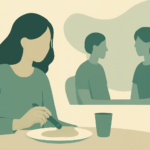
You spend all week waiting for the weekend. Then it arrives, and somewhere around ten on Saturday morning, you notice something strange. There’s no meeting to prepare for, no deadline to track, no reason to check your phone every few minutes — and instead of relief, there’s a low hum of unease you can’t quite place.
This is more common than people admit. Anxiety often needs something to attach itself to, and a packed Tuesday gives it plenty of targets: the presentation, the traffic, the email you haven’t answered. Strip all of that away, and anxiety doesn’t disappear. It just starts looking for something else to land on, and sometimes that something is a vague, floating sense that you’re forgetting to worry about the right thing.
Why structure quiets the noise
During the week, your attention is mostly spoken for. Tasks come with built-in start and stop points, and your mind has a job to do. That structure, even when it’s stressful, acts like a container. It tells your thoughts where to go.
Unstructured time removes the container. Without a next task pulling your focus forward, thoughts have more room to wander backward — toward a conversation from last week, a decision you’re not sure about, something you said that maybe landed wrong. This isn’t a character flaw or a sign that something is especially wrong with you. It’s closer to what happens when a radio loses its signal and starts picking up static instead.
If you’ve noticed this pattern shows up even when nothing identifiable is bothering you, it can help to read about how anxiety spikes that seem to come out of nowhere often have a quieter cause underneath, even on a day that looks calm from the outside.
The trap of trying to fix it with more plans
One common response is to overcorrect — fill every open hour with errands, social plans, and projects so there’s never a gap for the static to creep in. This can work for a while. But it also quietly teaches your nervous system that unstructured time itself is the enemy, something to be managed and outrun rather than tolerated.
That’s a tiring way to live, and it tends to backfire the moment a plan falls through. A canceled brunch or a rained-out hike can suddenly feel disproportionately upsetting, because the real function of that plan was never the brunch or the hike — it was keeping the open space from showing up at all.
A gentler approach is to build in just enough structure to feel steady, without trying to eliminate every unscheduled minute. A loose shape for the day — not an itinerary — often works better than either extreme.
What a loose shape can look like
This doesn’t need to be elaborate. It might mean deciding the night before on one or two anchor points for the next day — a time you’ll have coffee, a rough window for a walk, a specific hour you’ll start cleaning the kitchen. The goal isn’t productivity. It’s giving your attention a few places to rest so it isn’t left entirely to its own devices.
It also helps to notice what kind of unstructured time tends to trigger the spiral, since it’s rarely all of it. For some people it’s the first hour after waking up, before the day has any shape at all. For others it’s late afternoon, when the light changes and the day feels like it’s slipping away unused. Naming the specific window makes it much easier to plan around than treating the entire weekend as suspect.
Letting boredom be boredom
Part of what makes open time uncomfortable is that boredom and anxiety can feel very similar in the body — a kind of restless, unsettled energy with nowhere to go. It’s worth asking, when the Saturday unease shows up, whether it’s actually anxiety or just boredom wearing anxiety’s clothes. They often call for different responses. Boredom usually settles once you find something mildly engaging to do. Anxiety tends to need something gentler — a few minutes of just noticing the feeling without rushing to fix it, letting it move through rather than fighting it off.
Not every empty hour has to be filled or explained. Some of them are just empty, and that’s allowed.
Weekends without a schedule aren’t a problem to be solved so much as a different kind of terrain to get used to. The goal isn’t to make every Saturday feel as busy and distraction-filled as a workday. It’s to find a middle ground where open time feels spacious instead of exposed — where you can sit in it for a while without needing to fill every corner just to feel safe.