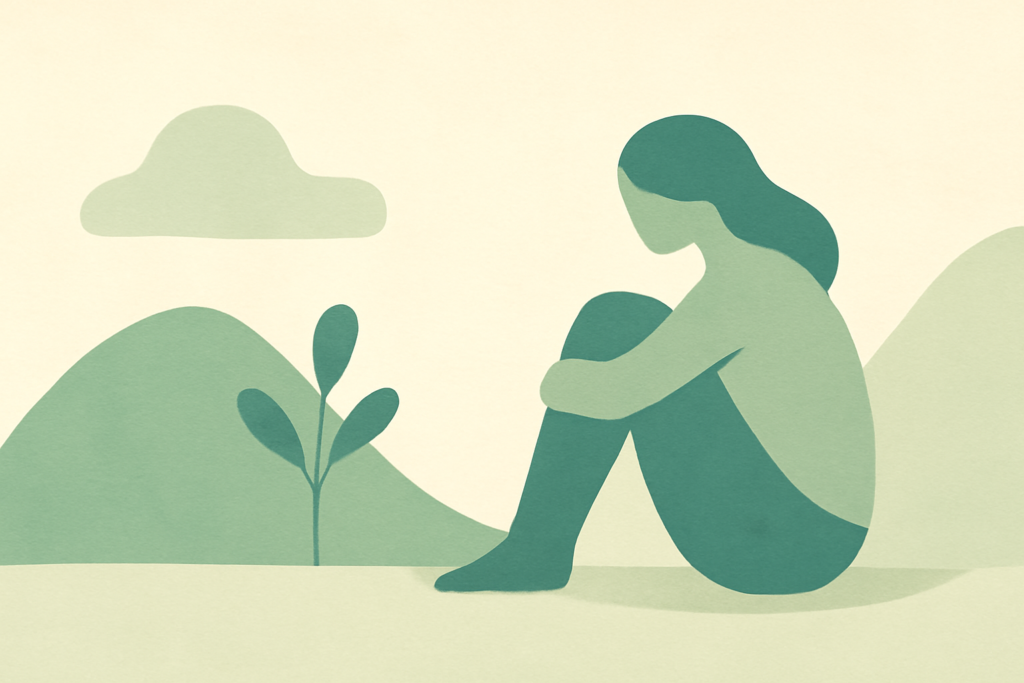
There’s a particular kind of anxiety that shows up once the test is done and the waiting begins. You’re not in the appointment anymore, where there’s something to do or someone to talk to. You’re just… waiting, with a phone that might ring at any moment and a mind that keeps rehearsing every possible outcome.
This waiting period has its own texture. It’s not quite the same as the fear of an upcoming appointment, and it’s not the everyday hum of generalized worry. It’s a specific kind of limbo, and it deserves its own set of strategies.
Why this particular wait feels so hard
Part of what makes this stretch of time difficult is that there’s nothing to do with it. You can’t prepare for results the way you might prepare for a hard conversation. The outcome is already decided somewhere in a lab or a radiology office; you just don’t know it yet. That mix of high stakes and zero control is a tough combination for an anxious mind to sit with.
It’s also common for the brain to fill that gap with stories, usually the worst-case kind. This isn’t a character flaw or a sign something is wrong with you. Uncertainty is uncomfortable, and minds tend to reach for an explanation, even a frightening one, over no explanation at all. If you want to understand more about how this spiral works, this piece on interrupting anxious thought spirals goes into it in more detail.
Giving the waiting a shape
One thing that can help is deciding, ahead of time, how you’ll check for results. Maybe that means looking at the patient portal once in the morning and once in the evening, rather than refreshing it every hour. Constant checking tends to feed anxiety rather than ease it, because each check is a small spike of adrenaline with no payoff most of the time.
If you know roughly when results are expected, it can help to write that date down somewhere visible, almost like a landmark. Not to count down to it with dread, but to give the waiting an edge instead of letting it feel endless. A lot of people find that having some kind of boundary around the uncertainty, even an arbitrary one, makes it easier to carry.
What to do with your body while your mind is busy
Anxiety during a wait like this often shows up physically before it shows up in clear thoughts: a tight chest, restlessness, trouble sleeping, a stomach that won’t settle. These are the body’s normal stress responses, the same ones that show up during a panic attack, just at a lower simmer. If you’re curious about the mechanics of that response, this article on what happens in your body during a panic attack explains it in plain terms.
Movement can be more useful than stillness here. A walk, some stretching, even pacing around the kitchen while on the phone, can give the nervous system somewhere to put all that activated energy. Short grounding exercises, like naming five things you can see or feel, can also pull attention out of the spiral for a few minutes at a time. A short list of grounding techniques is worth keeping handy for exactly this kind of stretch.
Letting other people carry some of it
Waiting alone tends to make the thoughts louder. Telling even one person what’s going on, and specifically what kind of support would help, can lighten the load more than it might seem like it would. For some people that means someone to distract them with ordinary conversation; for others it means someone who will simply sit with the worry without trying to fix it.
If a partner or close friend isn’t sure how to help, it can be useful to say so plainly: “I don’t need advice right now, I just need company” or “Can you check in with me Thursday, that’s when I think I’ll hear back.” This piece on supporting a partner with anxiety has some ideas that apply here too, even outside a romantic relationship.
Making room for ordinary life alongside the worry
It’s tempting to put everything on hold until the results come in, as if normal life should pause out of respect for the uncertainty. But filling the days with small, ordinary things, work, meals, a show you like, a call with a friend, gives the mind something to rest on besides the waiting itself. This isn’t about distraction as avoidance; it’s about not letting one unanswered question take over every hour of every day.
Some anxiety during this time is simply part of being a person who cares about the outcome. The goal isn’t to feel nothing while you wait. It’s to find a way through the days that doesn’t leave you wrung out before the answer even arrives.