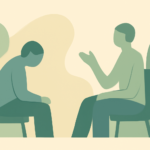
If you’ve ever thought about joining a support group but pictured a circle of chairs and a lot of silence, you’re not alone. The idea can feel intimidating, especially when part of what makes anxiety hard is the fear of being watched or judged. But most groups are quieter, more ordinary, and more forgiving than that image suggests.
At their core, support groups offer one specific thing that’s hard to get anywhere else: a room (or a screen) full of people who already understand, without needing it explained. That single fact changes a lot about how it feels to talk.
Why being understood matters so much
Anxiety often comes with a second layer of stress on top of the anxiety itself — the effort of trying to explain it to people who haven’t experienced it. You might find yourself downplaying symptoms, rehearsing how to describe a panic attack so it sounds “normal enough,” or just staying quiet. Over time, that adds its own kind of exhaustion.
In a support group, that translation work mostly disappears. Someone describes the racing thoughts at 3 a.m. or the way their chest tightens before a meeting, and heads nod. Nobody asks why you’re anxious about something that “isn’t a big deal.” This is part of why talking with people who haven’t lived it can feel so different from talking with people who have.
What actually happens in a session
Formats vary, but most groups follow a loose rhythm: a check-in where people share how their week has gone, some open discussion, and often a bit of structure — a topic, a coping skill, or a short reflection exercise. Some groups are led by a therapist or counselor; others are peer-led, meaning the group runs itself with members taking turns.
Nobody is required to speak. In fact, many people attend several sessions before saying much at all, and that’s considered completely normal. Just listening to others describe experiences close to your own can be its own kind of relief.
The specific ways it can help
Support groups aren’t a treatment on their own, and they work differently from therapy or medication. But they offer a few things those approaches don’t always cover.
They reduce the sense of being the only one. Anxiety can make you feel like you’re the exception — too sensitive, too much, uniquely broken. Hearing someone else describe your exact thought loop out loud tends to loosen that belief pretty quickly.
They offer practical, lived-in strategies. A therapist might teach breathing techniques or grounding exercises in general terms, but a group member might mention the specific way they get through a grocery store when panic starts, or how they interrupt a spiral of anxious thoughts mid-conversation. That kind of detail is hard to get from a pamphlet.
They give you a low-pressure place to practice being around people. For those whose anxiety shows up socially, a group can be a gentler space to test out speaking up, disagreeing, or just existing in a room without needing to perform being fine. If that sounds familiar, what social anxiety actually feels like might be worth a read too.
Finding one that fits
Not every group will feel right, and that’s worth expecting rather than seeing as a failure. Some are geared toward a specific type of anxiety, some toward a life stage or situation, and some are general. It can help to try a couple before deciding a group format isn’t for you.
Online groups have made this easier in some ways — you can attend from your own space, which matters if leaving the house is part of what feels hard some days. If you’re building a calmer setup at home in general, creating a corner of home that helps on anxious days pairs well with the idea of joining a group from somewhere you already feel safe.
Local hospitals, community mental health centers, and national organizations often keep lists of groups, both in-person and virtual. The Anxiety and Depression Association of America is one place many people start when looking for something nearby or online.
It’s okay to just observe at first
There’s no required pace for how quickly you open up in a group, and no version of it you’re doing wrong by staying quiet for a while. Some weeks you might talk a lot; other weeks you might just sit and listen, and both are a full use of the time.
What tends to matter most isn’t how much you say, but the simple fact of showing up somewhere that doesn’t require you to explain the basics first.