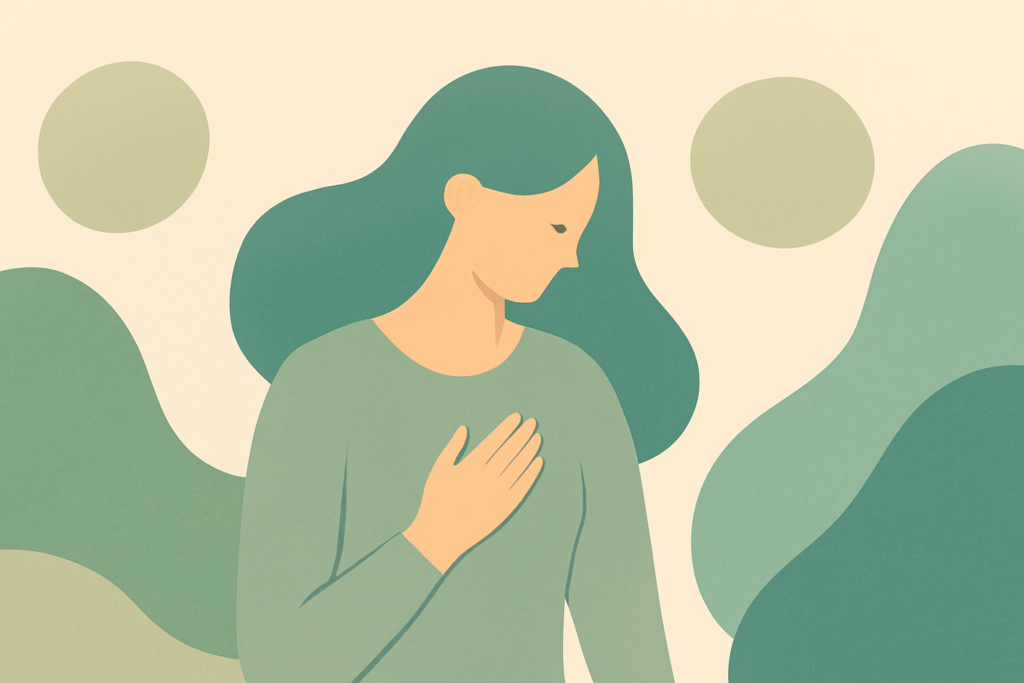
A lot of people picture anxiety as a kind of racing mind, a loop of worried thoughts that won’t quiet down. That’s part of it, but for many people the first sign isn’t a thought at all. It’s a tight chest, a churning stomach, or a heart that suddenly feels too fast for no clear reason.
This can be confusing, especially if you go looking for the “reason” you feel anxious and can’t find one. The body sometimes reacts before the mind has caught up, which is why physical symptoms can feel like they came out of nowhere.
The body’s alarm system doesn’t wait for permission
Anxiety is connected to the body’s stress response, sometimes called fight-or-flight. This is an old survival system that floods the body with hormones like adrenaline when it senses a threat, even if that threat is a work email or an upcoming social event rather than actual danger.
That flood of hormones causes real, physical changes. Your heart beats faster to pump blood to your muscles. Your breathing speeds up. Your stomach may slow down or churn, which is part of why anxiety and nausea so often show up together. None of this is imagined or exaggerated. It’s your body doing exactly what it’s built to do, just in response to something that isn’t actually life-threatening.
What this can feel like day to day
The physical side of anxiety shows up differently for different people, but some common experiences include a tight or heavy feeling in the chest, muscle tension in the shoulders or jaw, shaky hands, a racing or pounding heart, sweating, dizziness, or a stomach that feels unsettled for no obvious reason.
Some people notice it as fatigue that doesn’t match how much they’ve slept, or headaches that show up during stressful stretches. Others notice it in smaller, stranger ways, a lump in the throat, cold hands, or a feeling of being slightly outside their own body. If you’ve ever wondered what’s actually happening in your body during a panic attack, it’s often this same stress response turned up to a much higher volume.
Why this catches people off guard
Because these symptoms are physical, it’s common to look for a physical cause first, which makes sense. A racing heart can feel like a heart problem. A tight throat can feel like a swallowing problem. Many people spend time ruling out other explanations before anxiety even enters the conversation, and that’s a reasonable, careful thing to do.
It’s also worth knowing that ongoing stress and diagnosed anxiety disorders can look similar on the outside but behave differently over time. If you’re trying to sort out which one describes what you’re going through, this piece on telling stress and an anxiety disorder apart walks through some of the differences in plain terms.
Noticing the pattern without judging it
One thing that tends to help is simply noticing when physical symptoms show up and what was happening around them, not to diagnose anything, but to get a clearer picture. Did the tight chest start before a meeting? Did the stomach trouble arrive the night before something stressful? Patterns like this don’t explain everything, but they can offer useful clues.
It can also help to remember that these symptoms, uncomfortable as they are, are not dangerous on their own. A pounding heart from anxiety is still a heart doing its job, just responding to a false alarm. That understanding doesn’t make the sensation disappear, but it can take some of the fear out of the fear.
What can actually help
Because anxiety involves the body as much as the mind, working with the body directly is often part of managing it. Slow, steady breathing is one of the simplest tools, and there are specific techniques worth trying if your mind won’t slow down even when your body is exhausted.
Grounding techniques, gentle movement, and simply naming what’s happening in the moment can also help settle a stress response that’s gone into overdrive. If physical symptoms are showing up often enough to interfere with daily life, it can also be worth talking with a doctor, partly to rule out other causes and partly to have a starting point for support. This guide on bringing up anxiety with your doctor covers what that conversation might look like.
Understanding that anxiety lives in the body as much as the mind doesn’t make the symptoms vanish. But it can make them feel a little less mysterious, and a little less frightening, the next time they show up uninvited.