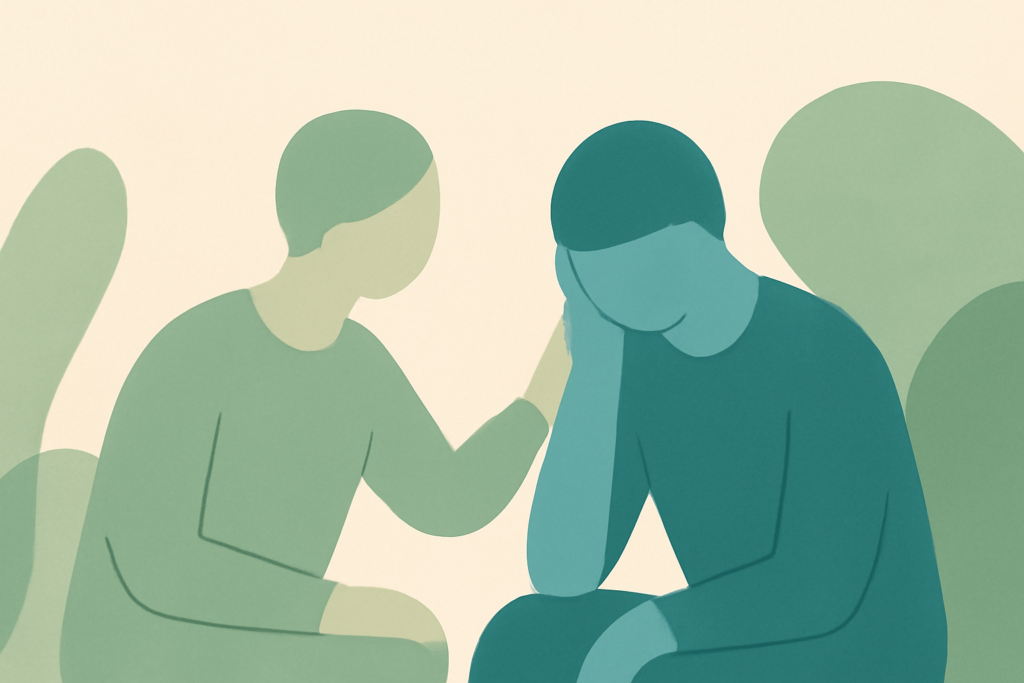
When someone you love lives with anxiety, it can feel like there’s a right answer out there if you could just find it. Some phrase, some gesture, some perfect response that would make the worry lift. Mostly, there isn’t one. What helps tends to be smaller and steadier than that, and it’s worth knowing what those small things actually look like.
Start by believing them
Anxiety often comes with thoughts that don’t match the actual risk in front of them. Your partner likely already knows this on some level, which can make the whole experience more confusing and lonely for them, not less. The most useful thing you can offer first is simply believing that what they’re feeling is real, even if the reason behind it seems small to you.
Saying “that sounds really hard” does more than “there’s nothing to worry about,” even when you mean well by the second one. Dismissing the fear, even gently, can make a person feel like they have to defend their own experience on top of managing it. For a closer look at what this actually feels like from the inside, this piece on what generalized anxiety disorder feels like day to day can be a helpful read together.
Ask what helps, instead of guessing
It’s tempting to jump straight into fixing. Offering solutions, researching treatments, reminding them to breathe. Sometimes that lands well. Often, though, a person in the middle of an anxious moment doesn’t want solutions yet, they want to feel less alone with what’s happening.
A simple question, asked on a calm day rather than in the middle of a hard one, can go a long way: “When you’re anxious, what actually helps, and what makes it worse?” People vary a lot here. Some want company and quiet. Some want distraction. Some want space. Asking directly means you’re not left guessing in the moment, and it tells your partner their specific experience matters more than a general idea of what anxiety “should” look like.
Notice the difference between support and rescue
There’s a natural pull to step in and handle things, whether that’s making the anxious phone call for them or quietly steering them away from anything that might trigger worry. It comes from care, but over time it can shrink a person’s confidence in their own ability to manage hard moments.
A steadier approach is being present while they do the hard thing themselves. Sitting with them while they make the call, rather than making it for them. Going to the event together, rather than suggesting they skip it. If there’s something specific coming up that’s causing dread, this piece on preparing for an anxiety-triggering event walks through how to get ready for it without taking it over.
Learn the shape of their anxiety, not just anxiety in general
Anxiety isn’t one thing. It shows up differently depending on the person, their history, and what’s going on in their life. Anxiety can feel very different from one person to the next, which means the version your partner lives with is worth learning specifically, rather than assuming it matches what you’ve read or seen elsewhere.
That might mean understanding their particular triggers, how their body reacts physically, or what a panic attack looks like for them specifically. Some people go quiet, others get irritable, some need to move, others need to stay still. Understanding what’s actually happening in the body during a panic attack can make those moments feel less alarming to witness, and easier to respond to calmly.
Take care of your own steadiness too
Supporting someone with anxiety over months or years takes something out of you, and that’s worth acknowledging rather than pushing aside. You’re allowed to have limits, to need a break, to talk to someone yourself about how it’s affecting you. None of that means you care less.
Setting a boundary doesn’t undo your support. Something like “I want to help, and right now I also need twenty minutes to myself” can be both true and kind. Your own steadiness is part of what makes you a safe person for your partner to lean on, so it’s worth protecting.
What to say when you don’t know what to say
There will be moments where nothing you say feels like enough, and that’s fairly normal. In those cases, plain and honest tends to work better than polished. “I don’t know exactly what to do right now, but I’m here” is a real sentence that a lot of people find genuinely comforting, precisely because it doesn’t pretend to have it solved.
Over time, you and your partner will build your own shorthand, your own signals for what’s needed in a given moment. That takes patience on both sides, and it rarely happens all at once. The goal isn’t to become an expert in anxiety. It’s to become someone your partner trusts to be steady, curious, and kind while they work through it in their own way.