If you’ve lived with anxiety for a while, you’ve probably noticed that the explanations don’t always match your experience. You read that anxiety is “excess worry” or a “fight or flight response gone wrong,” and it sounds tidy, but your actual days feel a lot less tidy than that. It turns out researchers have been noticing the same gap, and it’s changing how they study anxiety disorders.
None of this means anxiety is suddenly understood or solved. It isn’t. But a few shifts in the research world are worth knowing about, partly because they’re interesting, and partly because they might change how your own care gets talked about in the years ahead.
Moving away from one big category
For a long time, anxiety disorders were treated as fairly separate boxes: generalized anxiety, panic disorder, social anxiety, and so on, each with its own checklist. Researchers are increasingly questioning whether those boxes are as separate as they look on paper. Many people meet criteria for more than one, and the overlap in symptoms, biology, and what helps is significant.
Some researchers now study anxiety along shared dimensions instead, things like how sensitive someone is to uncertainty, or how quickly their body’s alarm system fires and how long it takes to settle. This lines up with something a lot of readers already know from experience, which is that anxiety can feel so different from one person to the next, even when the diagnosis on paper is the same.
The body is getting more attention, not less
Anxiety research used to lean heavily on thoughts and behavior, which makes sense, since those are easier to measure with a questionnaire. But there’s growing interest in the physical side: heart rate variability, sleep patterns, gut activity, even inflammation. Researchers are asking whether anxiety sometimes starts in the body and works its way up to the mind, rather than the other way around.
This matters for something the site has covered before, which is what’s actually happening in your body during a panic attack. The more researchers understand about those physical mechanics, the more precisely they may eventually be able to target treatment, rather than treating every anxious body the same way.
Sleep is being taken more seriously as a cause, not just a symptom
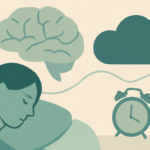
Anxiety and poor sleep have always been linked, but they used to be treated as if sleep trouble was just a side effect of being anxious. Newer research is looking at it as a two-way street, where poor sleep can actually make the nervous system more reactive the next day, which then makes sleep harder again. That loop is getting more research attention because breaking it in either direction seems to help the other side too, something explored in more depth in this piece on the anxiety and sleep loop.
Personalized treatment is the goal, even if it’s not fully here yet
A lot of current research is aimed at figuring out why one person responds well to a particular therapy or medication while another person with a similar diagnosis doesn’t respond at all. Genetics, past experiences, and even the specific pattern of someone’s anxiety all seem to play a role. The hope, still a few steps away in practice, is treatment that’s matched to the person rather than the diagnosis label.
In the meantime, this is part of why questions worth asking before starting a new anxiety treatment often include things about your own specific patterns and history, not just your diagnosis. Clinical trials are one of the main ways this kind of research moves forward, and understanding how anxiety clinical trials help researchers find better treatments can make the whole process feel less abstract.
Why this shift matters, even slowly
None of these changes will show up in your life overnight, and it’s fair to feel a little tired of hearing that research is “promising.” That word gets used a lot without much behind it. But the direction of this research, toward more individual variation and less one-size-fits-all thinking, tends to reflect what people living with anxiety have been saying about their own experience all along.
It can help to hold two things at once here: the science is genuinely moving, and your day-to-day experience of anxiety doesn’t have to wait on it to be valid. Both of those are true at the same time, and neither cancels the other out.
For more on the NIMH’s current framework for anxiety disorders, their overview of anxiety disorders is a reasonable starting point if you want the more clinical version of some of this.